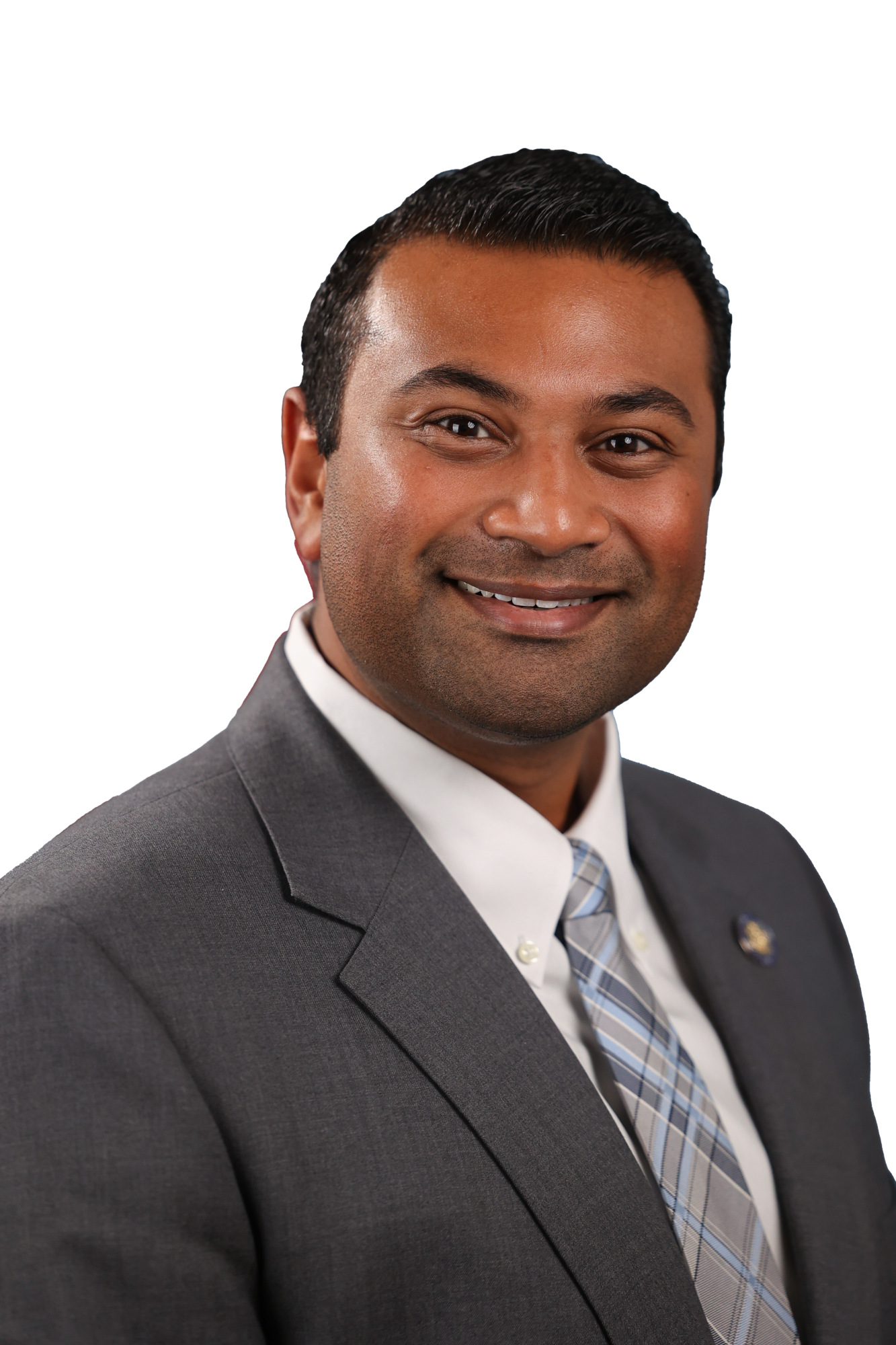
Assemblyman Beephan Joins Colleagues to Announce New Proposal to Improve Safety & Staffing in State Prisons
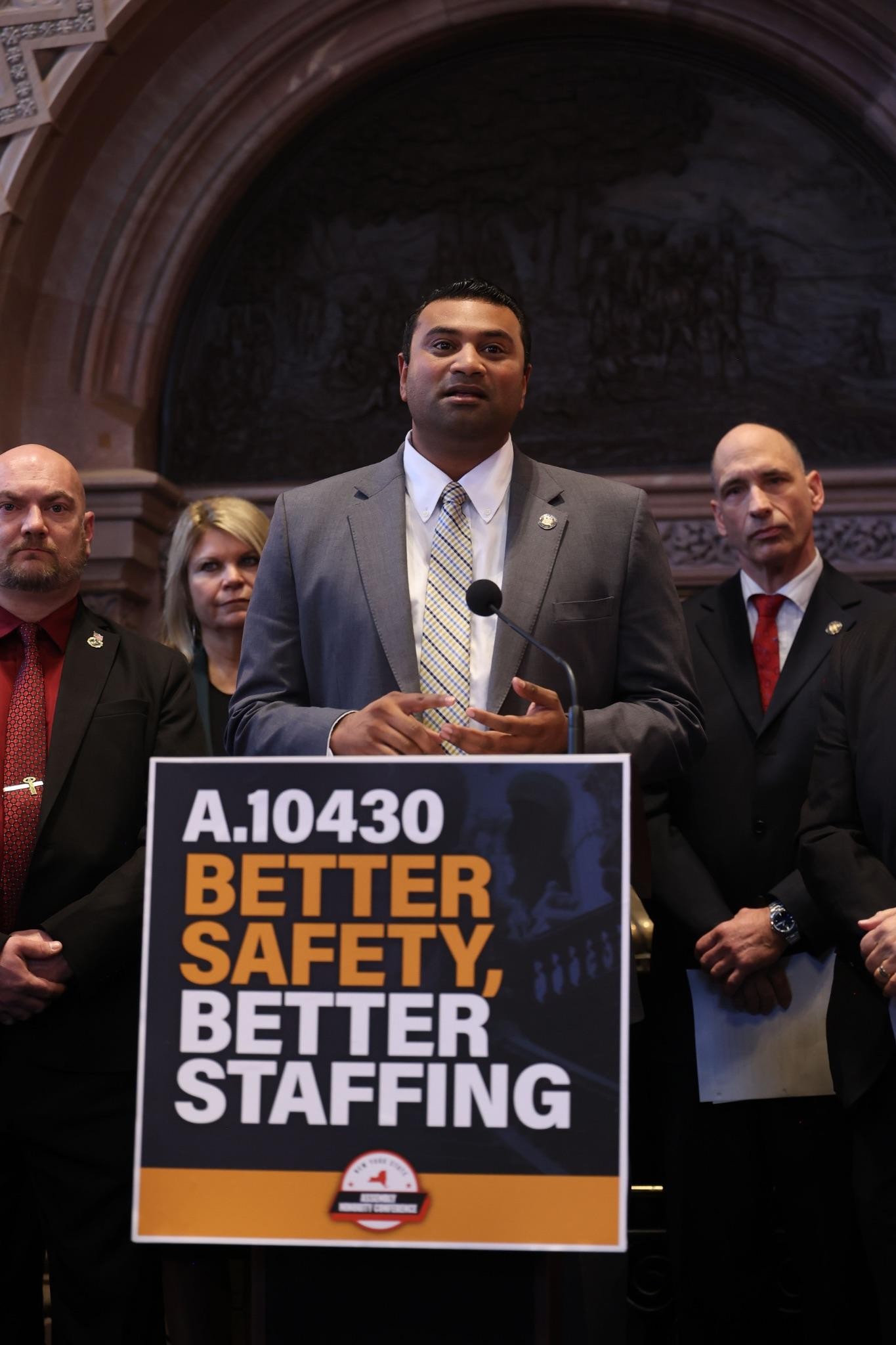 Assemblyman Anil Beephan, Jr. (R,C-East Fishkill) speaking today during the corrections press conference in Albany.
Assemblyman Anil Beephan, Jr. (R,C-East Fishkill) today spoke at a press conference in Albany to announce a series of new proposals aimed at enhancing both safety and staffing at state correctional facilities. Beephan and lawmakers are backing these proposals in response to years of increased violence against correctional officers and decreased staffing levels, which have helped foster violence in prisons across the state.
The proposals follow joint recommendations from the Department of Corrections and Community Supervision (DOCCS) and the New York State Correctional Officers and Police Benevolent Association (NYSCOPBA) to reform the flawed and failing HALT Act and help alleviate the ongoing staffing crisis within New York’s prison system.
“Correctional officers report to work each day under some of the most challenging and dangerous situations, and they are often in fear for their own personal safety. That’s wrong. The state Legislature has an obligation to ensure the men and women who oversee some of society’s most heinous criminals have the tools, resources and backing from lawmakers to do their jobs safely and effectively,” said Beephan. “Since its implementation, the HALT Act has worked against our men and women working in correctional facilities. That has to stop. That's why I was proud to stand with my colleagues today to propose a series of rollbacks to HALT and other measures that would help bolster safety and staffing in our state correctional facilities.”
Some of the provisions in the legislation Beephan is proposing include:
- Expanding misconduct/offenses eligible for segregated confinement.
- Revising definitions to align with penal law crimes, especially regarding all violent felony offenses.
- Permitting short-term segregated confinement for ongoing misbehavior that is not eligible for disciplinary confinement committed in general confinement.
- Reducing subjectivity in determining rioting or escape offenses.
- Allowing short-term protective custody in segregated confinement when no safe housing alternative is available.
- Giving DOCCS flexibility in administering out-of-cell programming and managing repeat offenders.
- Expanding considerations relating to good time allowances.