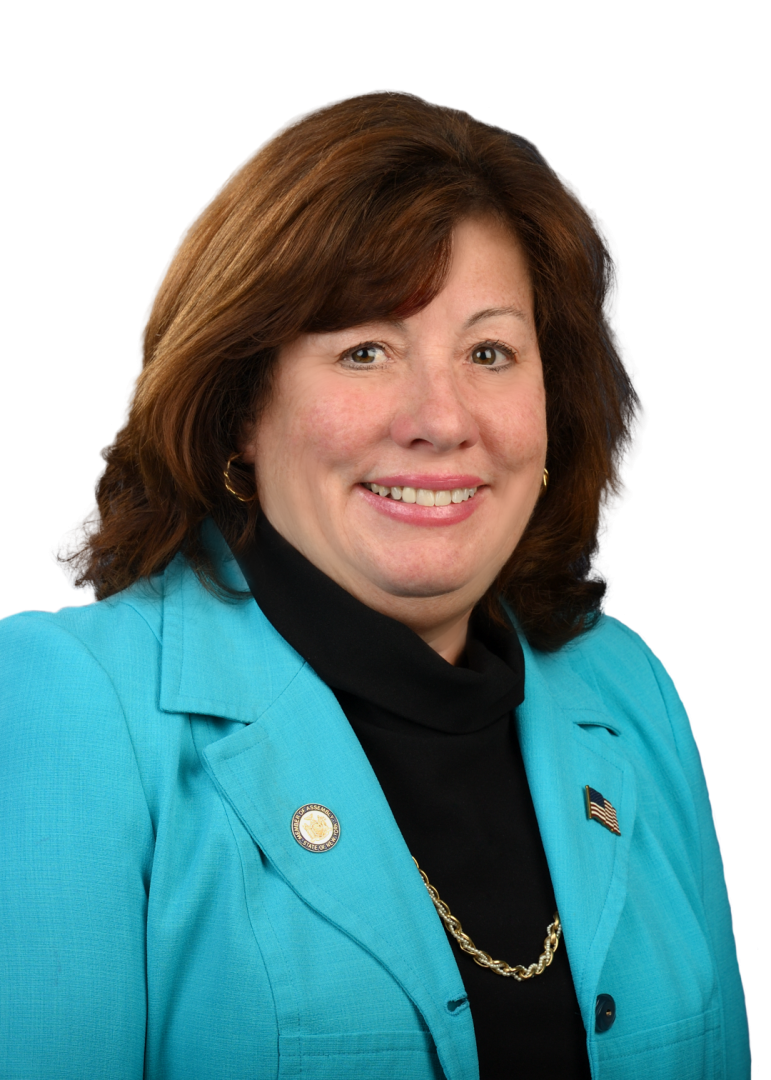
Assemblywoman Buttenschon Continues to Express Disappointment in the Inclusion of Policy in the State Budget Bills
“We have passed two more budget bills in the Assembly, the Public Protection and General Government (PPGG), and the Transportation, Economic Development, and Environmental Conservation (TED) Article VII Budget Acts. While I did not support both of these bills, I want to be clear that my opposition is not a rejection of every provision they contain, and is rather a principled stance against the inclusion of policy in our budget process and proposals that don’t meet the needs of my district. However, that is not to say that there are not positive steps being taken in this legislation; from securing educational benefits and recruitment incentives for our National Guard members, and providing paid critical incident leave to our state’s law enforcement officers, to modernizing our state procurement system and updating SLA licensing for our small businesses. Further included were modifications to the Tier 6 and public employee’s pension system, and death gamble benefits for law enforcement and correctional officers, as well as measures to increase Public Service Commission (PSC) and utility bill transparency, establish a new crime of criminal interference with access to a place of religious worship, and steps to move New York State towards realistic environmental goals, including changes to the State Environmental Quality Review (SEQR) process, all measures that I have advocated for in their own right this session. However, my opposition is two-fold. As I have stated before, I do not support the inclusion of matters of policy in the budget, as this is supposed to be a fiscal document and should remain as such. Matters of policy should be brought to the floor in order for us to adequately examine and debate them on their individual merits.
“With the recent increase in utility rates and skyrocketing bills, a new level of transparency and changes to how the PSC approves rates is necessary. The year’s budget enacts some of those necessary changes, including requiring the PSC to justify rate increases, keeping rates in place if the PSC denies a major rate change, unless and until it approves of new or temporary rates, putting an end to automatic increases for utilities. This year’s budget also requires utility companies to disclose the compensation of their CEOs and allows the PSC to install an Independent Affordability Monitor at utility corporations if the PSC approves of a rate increase of more than 3%, who shall have access to documents and manager meetings and report back to the PSC the primary cost drivers and any opportunities for costs savings and residential rate reductions.
“Furthermore, there were several policy provisions I could not support, as regardless of their intent, the immigration policies included fail to increase overall public safety and raise more questions than they answer in relation to the jurisdiction of the State over federal law enforcement actions, and instead serve to possibly restrain the ability of local and state law enforcement to conduct their public safety mission, over which the State has exclusive control. While I am overwhelmingly grateful for and recognize that the strength of our local communities stems from the diversity and acceptance therein, the policies that have been put forth in this bill are toothless without meaningful Federal action.
“In regards to the provisions related to auto insurance, the most imperative question that has yet to be both proven and answered is: will residents actually see their insurance costs go down under these measures? While it is evident significant relief is needed, the evidence that these provisions will have an impact remains unclear.
“On the topic of the measures pertaining to the manufacturing of ghost guns and firearm components, it is clear that action must be taken to limit the ability of bad actors to access these unregulated homemade weapons. However, the restrictions that have been put forward under the language of this provision do not provide enough clarity as to the specific types of, and who is responsible for, the firearms regulated under this bill.
“The streamlining of our state procurement process is a welcome step. This budget raises the discretionary purchase thresholds for State Agencies and Departments thereby reducing undue & costly bureaucratic hurdles. We also protected our small business owners, by upholding, with no modifications, Class C license holders under the State’s Alcohol and Beverage Control laws, maintaining an essential lifeline and preserving competitiveness for small businesses and wholesalers within the industry.
“Additionally, I am proud to have co-sponsored the included provision establishing Critical Incident Leave policies for state law enforcement. Every day, our State’s law enforcement officers face unimaginable circumstances in the line of duty, and ensuring that they have the time and support to recover from deeply traumatic events is not only the right thing to do, it is essential to maintaining a healthy and effective public safety workforce and represents our commitment to treating mental wellness with the same seriousness as physical safety.
“And while I proudly support the reauthorization of the Recruitment Incentive and Retention Program, which provides educational benefits and recruitment incentives to our State’s National Guard members, I am disappointed that this measure was not made permanent, as was originally proposed.
“I also want to acknowledge the Tier 6 pension reforms included in the TED legislation, which represent a long overdue step toward establishing parity and equity within our State’s public service retirement system. Reduced full-benefit retirement ages for educators, lower overall contribution rates for all employees, and an increase in the overtime threshold that counts toward pension benefits, raised from $22,000 to $30,000 annually and from 15 percent to 25 percent for fire and law enforcement personnel, will provide greater financial security for public servants across the board. However, while these reforms are not only essential, but are the right thing to do by our workforce, the increased employer contribution requirements will place a significant burden on local governments, school districts, and municipalities, and we must be prepared as a State to provide the support necessary to ensure that these reforms do not shift the burden and increase costs on local taxpayers.
“No family should face financial uncertainty simply because their loved one did not live to see their retirement. Another long overdue pension reform I am proud to support is the expansion of a policy often called the ‘death gamble benefit’, which will now allow for beneficiaries of law enforcement and correctional officers to receive, as lump-sum, the full value of their members accrued pension reserve.
“Recognizing the real-world conditions that have constrained the State’s environmental goals, the TED Act makes modifications to the CLCPA, extending the deadline for regulatory implementation to 2028, updating the State’s deadline of achieving net-zero emissions by 2030 to an adjusted 60 percent reduction by 2040, stops including upstream effects in calculations, and changes the way we measure carbon dioxide equivalents to be in line with the federal government and the rest of the world. This last measure will change the impact timeline measured from the current 20 years to a 100-year consideration, providing a more stable and comprehensive long-term measurement of emissions impacts. Additionally, the SEQR process has been modified to streamline the environmental preview for projects on previously developed sites, helping to accelerate housing and redevelopment construction. However, this legislation fails to account for natural gas, continuing to abide by the fallacy that these goals can be met without the continuance of natural gas generation.
“This budget also sends a clear message that New York State will not stand by silently in the face of hate and religious and ethnic discrimination. The right to practice one's faith freely and without fear is a foundational American value, and it is one that is increasingly under threat. In New York State, hate crimes have increased by 69 percent over the past five years, and no one, not anywhere in this state, should have to fear for their safety simply because of how or where they choose to worship. Today’s TED Act establishes the crime of criminal interference with access to a place of religious worship, an unambiguous message to those who seek to obstruct, intimidate, or interfere with all individuals accessing a place of worship. The diversity of faith in our communities is not a vulnerability to be exploited, it is a strength to be protected, and I will always stand firmly against any attempt to use fear and intimidation to silence it.
“However, my position on these bills remains unchanged, our State Budget should only serve as purely a fiscal blueprint for our government, not as a tool for advancing policy initiatives. Significant matters of public policy deserve to be debated openly and independently on the Assembly floor, where they can receive the full transparency, scrutiny, and deliberation they warrant on their own merits.”