|
|||
 |
|
||
|
ASSEMBLY UNVEILS Six-bill package seeks to improve accountability and consumer protections and curb premium increases
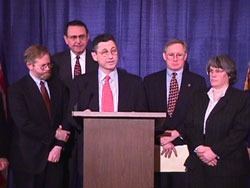
"Medical decisions should be made by doctors and their patients and not by accountants or insurance company bureaucrats," said Assembly Speaker Sheldon Silver as he unveiled the Assembly's HMO reform package at an afternoon news conference. Joining Silver at the event were chairs of the Assembly Health and Insurance Committees, Assemblymen Richard Gottfried and Alexander "Pete" Grannis, respectively, and consumer and health care advocates. The Assembly's six-bill package is aimed at increasing Health Maintenance Organizations (HMO) accountability, ensuring quality care for New York State's health care consumers and curbing insurance premium increases. "Patient care and the efficient delivery of quality health services must come before insurance company profits," said Silver. "The bills we expect to consider today will go a long way toward achieving this goal." The cornerstone of the Assembly's package is a measure (A.1400) that would hold HMOs legally liable for the consequences of their decisions as they relate to the delivery of health care to their members. "Increasingly, insurance companies and HMOs control health care," said Gottfried, the bill's sponsor. "They can deny care, cancel tests, refuse hospital admission, send patients home early and switch drug prescriptions. But when the patient's health is damaged, the health plan is above the law. They must be held accountable for their actions." The bill also seeks to protect health care providers, many of whom have criticized health care organizations about providing inadequate medical care. Under terms of the legislation, these organizations would be prohibited from offering incentives aimed at encouraging providers to delay, fail or refuse to render adequate care. Another key bill would curb the rising cost of insurance premiums. Grannis explained that prior to 1996, the State Insurance Department (SID) required public hearings on all rate increases submitted by non-profit insurers and HMOs. At the Pataki administration's insistence, this requirement was dropped for all proposed increases less than 10 percent. As a result, premium increases under 10 percent have become routine, and some insurers are instituting automatic 10 percent increases and applying for additional rate increases with SID. "Until this year, health plans seeking rate hikes in excess of 10 percent per year have had to justify such requests at public hearings and win the approval of SID before they went into effect," said Grannis. "This system served to discipline health plans and also provided the public with a forum to bring about real change, such as the rate subsidy system for the direct pay market adopted in the HCRA 2000 legislation. At a time of double-digit rate increases, I think most New Yorkers would be appalled to learn that health plans can simply 'file and use' whatever rates they choose." Under this bill (A.1504), all premium increase requests more than five percent would be subject to SID review. Grannis noted that in the month of December alone, SID had convened public hearings on rate hike requests ranging from 15 to 105 percent. He also noted that the bill had been approved by wide margins in the Assembly for the past two years. Other bills in the Assembly package would:
- 30 - |
|||
|
|
|||