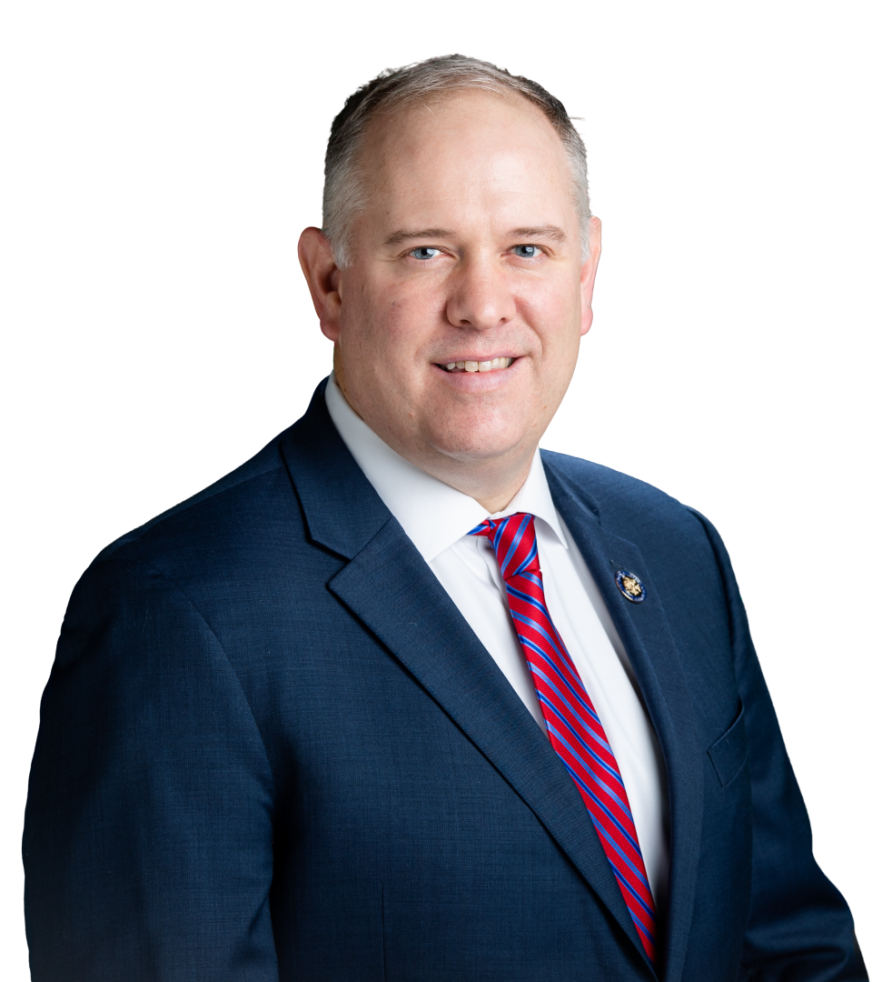
Thank you for requesting that I testify before the New York State Commission on State Asset Maximization. I am Assemblyman Robin Schimminger, Chairman of the State Assembly Committee on Economic Development, Job Creation, Commerce and Industry, and I represent a district immediately to the north of the City of Buffalo that straddles the Erie-Niagara county line. The Assembly Economic Development Committee has purview over a number of issue areas, most significantly that of encouraging and supporting economic development. As chairman, I am tasked with seeking out and developing ways in which to best succeed in that venture.
Using the structure of public and private entities engaging with one another in joint projects and creating vehicles for asset generation is one aspect of accomplishing this goal and leads me to what I came to testify about today. An excellent structure for public-private partnerships, one that leverages future growth and development for the public good, is Tax Increment Financing (TIF).
TIF is a self-effectuating program that allows municipalities to attract capital investment either through gap financing for a private sector project or through the development of infrastructure. Conceptually, TIF allows for the leveraging of future tax benefits of real estate improvements to pay the present cost of those improvements. Municipalities that determine that TIF is an appropriate tool for their development project establish a TIF district, specifically designating the geographic boundaries and time duration for the approved project. The municipality then freezes the property taxes of the TIF district and issues bonds to pay for upfront costs of the approved project. Once the project is completed, the tax increment, or the increase in the real estate tax revenue, is used to pay back the TIF bonds. Once the TIF district debt is paid or is terminated, the municipality itself reaps the benefits of the increased tax revenues, in addition to the increased tax base and increased economic activity spurred by the project and its final use. Notably, in addition to infrastructure development, TIF can be used as a “gap financing” tool to help private investment entities who may not be able to finance or secure financing for a project on their own.
Although nationally TIF has been proven to be a valuable tool that municipalities can use to stimulate private investment, here in New York State it is extremely limited by law in the available funds for repayment of TIF bonds and the projects for which the TIF bonds may be used. When the New York State Constitution was amended in 1984 to allow for TIF, the ability for municipalities to apply the school portion of real property taxes to pay for debt service on TIF bonds was not incorporated into the subsequent enacting legislation, Chapter 916 of the Laws of 1984. The inability of municipalities to integrate the school portion of real property taxes into the funds available to repay TIF bonds disallows the use of approximately 60% of all real property taxes in New York, which prevents the issuance of larger TIF bonds for significant redevelopments and effectively cuts the program off at the knees. Allowable TIF projects include blighted areas, but not specifically brownfield redevelopment or environmental remediation, which, as many of you know, are of great concern to all of New York State, but especially here in upstate New York. In addition, the lack of alternative revenue sources to back the debt service on TIF bonds, and the uncertainty of future years’ assessments while TIF bonds are outstanding to raise adequate amounts of incremental tax for debt service on TIF bonds, have impeded the utilization of TIF.
When I came to understand the value of using TIF to spur growth and development, the resources that become available to municipalities when TIF is utilized to its fullest, and the impediments to its full potential, I set out to update the TIF law and remedy these oversights. I introduced legislation (A.10365 of 2006) to these ends on March 20, 2006.
Specifically, the legislation would allow the school portion of real property taxes to be included in the funds available to repay TIF bonds. Under the terms of my legislation, school districts would not be required to participate in the tax increment financing process. However, they could elect to do so by resolution of their board of education. A participating school district would receive all notices and approve all proceedings. In addition, the legislation would expand the use of TIF bonds to specifically include environmental remediation, brownfields redevelopment and distributed energy generation.
The legislation addresses the issue of debt service by providing several alternative revenue sources to support debt service on TIF bonds. Tapping sales tax receipts, municipal assistance agreements, and special benefit assessments all are currently authorized and available in various forms to support state and local government debt. This legislation applies these procedures to TIF bonds. In addition, the legislation provides for further sources of security for TIF bonds, including a pledge of up to 10% of county sales tax receipts, annual appropriations assistance payments up to 10% of the annual debt service, the establishment of an assessment area co-terminus with the project area to provide revenues for debt service if incremental real property taxes are deficient, and the establishment of reserve funds up to 10% of the maximum annual debt service on the TIF bonds.
Finally, the legislation requires that an estimate of allocations for such years that the TIF bonds are outstanding be made before TIF bonds are issued to provide investors with material information about the creditworthiness of TIF bonds.
I was able to secure a Majority Senate sponsor, Senator Catharine Young, who introduced identical legislation (S.8192 of 2006) on June 12, 2006. Since that time, I and other interested parties have been building support for the changes to the current law. Senator Young and I both reintroduced the legislation in 2007 (A.2358/S.371 of 2007-08) and have continued to push for its passage.
Interested parties from both public and private entities have made their resounding support known. Specifically, to date, I have heard directly from and have received support memos and letters from the New York State School Boards Association, the New York Conference of Mayors, the New York State Association of Counties, the Business Council of New York State, the New York State Economic Development Council, The Buffalo Niagara Partnership, Unshackle Upstate, the Broome County Legislature, the Mayor of Schenectady, the Mayor of Plattsburgh, the Mayor of Yonkers, the Greater Binghamton Chamber of Commerce, the New York State Builders Association and the National Brownfields Association, and numerous favorable editorials and commentaries have been published or reported in statewide and local news outlets.
I fully intend to reintroduce this legislation for the upcoming 2009-2010 Legislative Session. Depending on the outcome of the Senate leadership situation, I may have to seek a new Senate sponsor who understands the need for change to current law and the impact that such a change will have on brownfield redevelopment projects across the state and the positive impact on the economic climate for municipalities and the State as a whole.
Again, I thank you for allowing me to testify before you today, and I hope that as the New York State Commission on Asset Maximization reviews the ways in which the state can leverage its assets into potential growth and development, the changes embodied in my legislation will be incorporated into the final recommendations of the Commission.