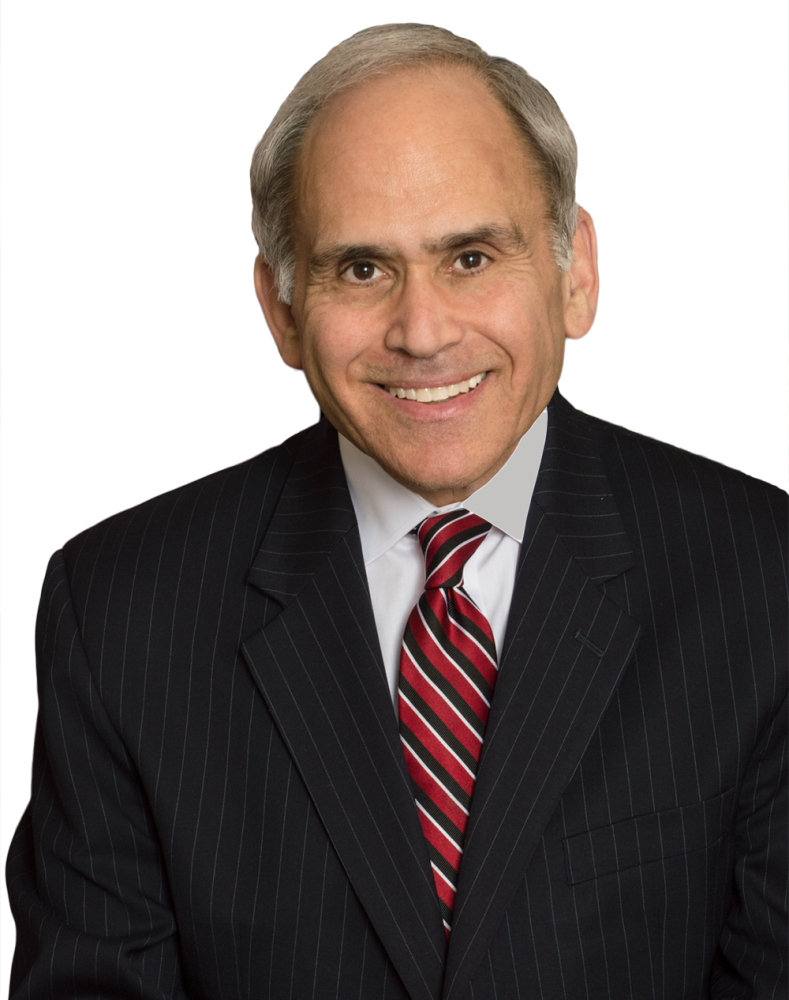
Jacobson Hearing Uncovers Major Barriers to Replacing Lead-Contaminated Water Lines
In a committee hearing convened last week by Assemblymember Jonathan Jacobson (D-104), officials warned that there are serious funding challenges to removing all of the State’s lead-contaminated water lines by the Federal deadline of 2037.
As chair of the Assembly Oversight, Analysis and Investigation Committee, Jacobson held the hearing with participation from the Environmental Conservation Committee, chaired by Assemblymember Deborah Glick (D-66), and the Health Committee, chaired by Assemblymember Amy Paulin (D-88). The committees heard three hours of testimony that included representatives from the Department of Health, the Environmental Facilities Corporation, several municipalities, and advocacy groups.
“We need major reforms and a sense of urgency,” Jacobson said in his opening statement. “Our job is to help devise a path that gets us to the finish line on time.”
According to the U.S. Environmental Protection Agency, New York has approximately 500,000 lead-contaminated water lines. The Federal deadline to remove all of them is 2037. This means the State would have to replace more than 41,000 lines per year over the next 12 years, at an annual cost of approximately $410 million.
The hearing focused on why so little of the available funding is getting to municipalities. To date, New York State has awarded only about $200 million of State money (of which $160 million was for loan forgiveness), along with $340 million of Federal money, for inventory and water line removal. Of the Federal money awarded, just $60 million has made it to the funding agreement stage and actually been received by municipalities. Only $5 million from the $4.2-billion Environmental Bond Act has been distributed.
Jacobson noted that the State currently has no plan to ramp up spending to meet the deadline.
“The process of getting money should not be a version of the Hunger Games, pitting one municipality against the other in a deadly competition,” Jacobson said. “These lead-contaminated lines remain in use, threatening public health, until they are replaced.”
Even low levels of lead exposure are linked to a range of serious health issues, including developmental and neurological disorders, high blood pressure, and reproductive risks. Lead impedes brain development in children, and the risk is particularly high for infants.
Local government officials and advocates alike testified that many municipalities, especially smaller or economically challenged ones, often lack the capacity to apply for grants, prepare engineering reports, or pay the up-front costs to qualify for State reimbursements.
Voorheesville Mayor Richard Straut, who provided testimony on behalf of the New York Conference of Mayors (NYCOM), agreed with Jacobson’s “Hunger Games” comparison, highlighting the public health equity issues surrounding lead line replacement. “Municipalities are ready to work. We simply need the tools to do it,” Straut said.
Kingston Mayor Steve Noble echoed this idea, saying it takes staff capacity to navigate the process with State agencies: “I have an entire Grants Management Department of two full-time people, as well as multiple project managers who are able to focus and understand each and every one of these State programs.” He also pointed out that the required engineering report can cost a minimum of $50,000. And with all this, municipalities don’t know if they’ll get a grant, a loan, or a mix of both – making budget planning more difficult.
In written testimony, The City of Newburgh noted that it had replaced more than 250 lines total, including 76 lines with about $543,000 in funding from the now-defunct Lead Service Line Replacement Program (LSLRP), and the rest from money it secured on its own, including through the American Rescue Plan. The City’s conclusion was stark: “The programs as designed – fragmented, reimbursement-based, administratively intensive, and out of step with small-city capacity – cannot scale to the level required.”
The goal now is to put a program in place that can provide that agility.
After the hearing was announced, Governor Hochul set aside approximately $66 Million in grants to replace lead service lines under the Lead Infrastructure Forgiveness and Transformation (LIFT) program. But these grants can only be provided to municipalities that have already successfully received funding for lead line removal, and it represents only a fraction of the annual need statewide. Jacobson has repeatedly requested a $100-million earmark in the annual State budget for lead service line replacement, but this line item hasn’t materialized.
“Let me be clear: I am not accusing any agencies of bad faith in their actions to meet this crisis,” Jacobson said during the hearing. “But based on what we have learned up to this point, I have no faith in the State’s ability to meet the 2037 deadline.”
The hearing is part of a larger investigation into lead service line replacement in New York State. Testimony will be included in a final committee report, set for release next spring.